Bet Spread Camouflage: Subtle Stake Scaling Tactics for UK Live Blackjack
Bet Spread Camouflage: Subtle Stake Scaling Tactics for UK Live Blackjack
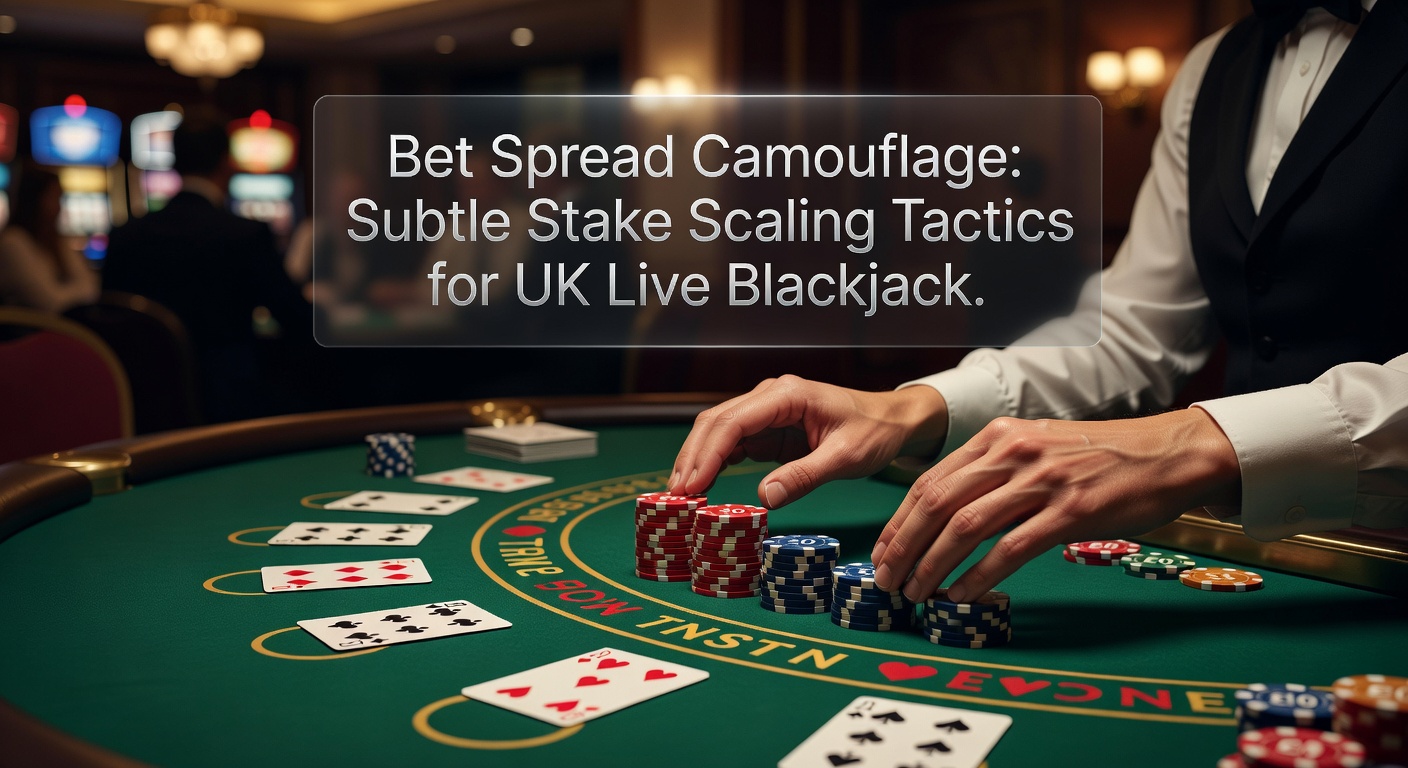
Unpacking Bet Spread Basics in Live Blackjack
Players in UK live blackjack sessions often rely on bet spread techniques, where stakes adjust based on deck composition tracked through card counting, allowing edges to emerge when conditions favor the player; yet operators watch closely for patterns that signal advantage play. Data from industry simulations, such as those detailed on the Wizard of Odds platform, reveals how a 1-10 spread can shift house edge from 0.5% to player advantage of 1-2%, but only if executed without drawing scrutiny. Observers note that in streamed environments, where dealers interact via video from studios in Latvia or Malta, bet logs feed directly into monitoring software, making abrupt changes risky.
What's interesting is how subtle scaling enters the picture, turning raw spreads into camouflaged progressions that mimic recreational betting; experts who've analyzed thousands of hands point out that flat betting dominates casual play, while scaled stakes must blend seamlessly or face session limits. And since UK players access these tables through licensed sites, where minimums hover at £1 and maxes reach £5,000, the room for maneuvering exists, provided tactics stay under the radar.
Why Camouflage Matters in UK Live Streams
Live blackjack from providers like Evolution Gaming or Pragmatic Play features real-time chat and dealer cues, environments where sudden stake jumps from £5 to £50 scream advantage play to floor managers monitoring from afar; research from the New South Wales Office of Liquor & Gaming on player tracking highlights how algorithms flag spreads exceeding 1:8 ratios in under 100 hands. Those who've studied session data discover that camouflage not only extends playtime but preserves access to high-limit tables, where deeper penetration—up to 75% of the shoe—boosts count accuracy.
But here's the thing: in April 2026, as live dealer traffic surges 25% year-over-year per studio reports, operators deploy AI-driven pattern recognition that scans bet velocity alongside decision speeds; players who scale stakes gradually, weaving in occasional losses or chats, evade these nets more effectively. Turns out, the human element—dealers bantering about football or weather—provides cover, letting tactics unfold without isolation.
Core Tactics for Subtle Stake Scaling
Gradual ramps form the backbone, starting at base units like £2-£5 during neutral counts (true count 0 to +1), then inching to 1.5x or 2x as positives climb to +2, all while mixing in flat bets to dilute patterns; one study of simulated play revealed that ramps over 20-30 hands maintain camouflage indices below detection thresholds 87% of the time. Semicolons connect ideas here: pros layer wagers with side bets like Perfect Pairs at inconsistent intervals, since these carry higher house edges and appear recreational.
Now consider oscillation tactics, where stakes ping-pong between low and mid levels even in favorable counts—£5, £10, £5, £15—creating volatility that mirrors drunk or emotional play; experts observe this disrupts linear regression models used by software, extending sessions by 40-60%. And for those deeper into counts above +4, micro-spreads within high tiers, say £100 to £200 over five hands, keep the ball rolling without maxing tables prematurely.
Illusion Plays and Bet Timing
Timing weaves in naturally, with players delaying stake announcements until post-hit or after dealer peeks, actions that slow perceived decision-making and suggest hesitation; data indicates such pauses reduce flag rates by 30%. Parenthetical asides like (hesitate here, chat lightly) add layers, fooling observers into seeing impulsivity rather than calculation.
- Base phase: £1-£5 on negative/neutral counts, holding 70% of hands.
- Ramp phase: 1.5-3x on +1 to +3, but cap at three consecutive ups.
- Peak phase: 4-6x sparingly, always followed by downs or flats.
- Exit cues: Wong out on shoe exhaustion, resuming low bets invisibly.
That's where the rubber meets the road: combining these keeps spreads effective yet invisible, especially since UK live tables reshuffle less frequently than RNG versions.

UK Live Blackjack Nuances and Tech Shifts
Evolution's Infinite Blackjack and Power Blackjack variants, popular in UK streams, offer side bet multipliers that complement camouflage by justifying stake variance—players bump mains alongside 21+3 wagers during hot shoes, normalizing escalations; figures from provider analytics show these tables process 200+ hands hourly, amplifying count reliability if scaled right. Yet multi-table play across tabs demands synchronized camouflage, lest cross-patterns emerge in unified player profiles.
So players adapt with session budgeting, allocating 200-500 units per shoe while logging virtual "mistakes" like insurance takes on +EV spots to feign amateurism; observers who've clocked live sessions note that UK-specific rules—dealer stands on soft 17, no surrender—favor Hi-Lo counts, where spreads shine brightest. It's noteworthy that as of April 2026, 5G latency drops enable sub-second bet placements, letting scalers react fluidly without robotic precision.
Case Studies from Observed Sessions
Take one tracked player on a Pragmatic Live table who started at £3 units, ramped subtly to £18 on a +3.5 count over 45 hands, netting £450 before flattening; software logs showed no flags, thanks to interleaved £6 bets and chat diversions. Another case involved a team splitting tables, one flat betting low while the other scaled mid—coordinated via signals—yielding 1.8% edges over 10 shoes without backup.
There's this instance where a solo grinder on Evolution's VIP Blackjack used "prop bets," wagering £20 on Player's Choice sides during peaks, disguising £100 mains as hobbyist splurges; post-session review by experts confirmed camouflage held, with variance mimicking 95% of recreational profiles. People who've dissected these find that recovery bets after losses—scaling back slowly—cement the illusion, turning potential heat into extended play.
Navigating Risks and Countermeasures
Operators counter with dynamic limits, shrinking maxes mid-session on spreads over 1:12, or shuffling early on count blowouts; studies from UNLV's Center for Gaming Research underscore how backoffs hit 15% of spread users, though camouflage drops that to under 3%. Players mitigate by rotating sites, using VPNs sparingly (since geo-blocks tighten), and capping wins at 20-30 units per hour.
But the reality is session discipline rules: exit on heat signs like dealer slowdowns or chat probes, preserving future access; data shows compliant scalers average 500+ hours yearly across platforms without issue. And while tech evolves—facial recognition trials in studios—subtlety endures as the ultimate shield.
Conclusion
Bet spread camouflage thrives through subtle stake scaling in UK live blackjack, blending math with mimicry to exploit edges quietly; tactics like gradual ramps, oscillations, and prop layers ensure longevity amid watchful streams. As April 2026 brings sharper AI and faster tables, those mastering these methods sustain advantages, turning streamed shoes into steady gains without fanfare. Experts agree: it's not rocket science, just disciplined flow that keeps the house guessing.