From Handcrafted Origins to Engineered Precision: Roulette Wheel Evolution and Its Influence on Modern Randomness
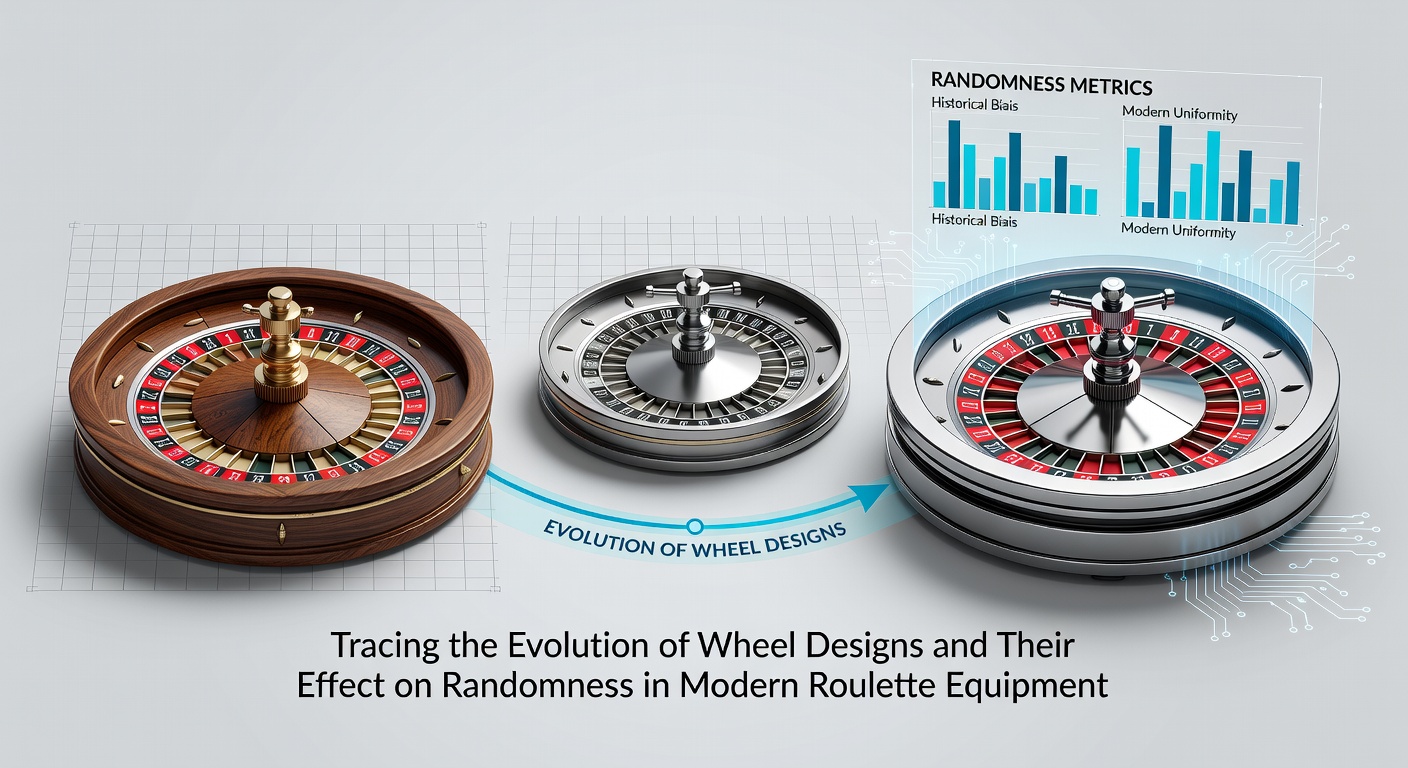
Early roulette equipment emerged in 18th-century France, where artisans constructed wheels from oak and mahogany while carving pockets by hand, and these initial designs featured 38 compartments that included both single and double zeros to create house edges that operators could reliably calculate. Manufacturers added brass dividers between pockets, yet variations in depth and spacing often produced subtle mechanical preferences that attentive players later documented in observational records.
Material Shifts and Structural Refinements Across Centuries
By the mid-19th century European workshops began replacing wooden frets with ivory or bone segments because these harder materials reduced ball bounce inconsistencies, while American builders simultaneously adopted thicker wooden rims and heavier metal separators to withstand higher volumes of play in expanding casino markets. The transition to aluminum and stainless steel components accelerated after 1900, and these metals allowed tighter tolerances during machining processes that minimized pocket-to-pocket differences. Observers note that such upgrades coincided with teh introduction of balanced bearings, which replaced simple wooden axles and thereby lowered friction variations that had previously affected spin durations.
Manufacturing Advances and Randomness Testing Protocols
Twentieth-century engineering introduced computer numerically controlled milling that produced pocket walls with uniformity measured in fractions of a millimeter, and regulatory laboratories in multiple jurisdictions began requiring statistical verification of spin outcomes before approving equipment for commercial use. Data collected from thousands of documented spins demonstrated that precision-machined wheels generated result distributions closer to theoretical probabilities than their hand-finished predecessors. Manufacturers incorporated adjustable leveling feet and reinforced rotor assemblies that resisted warping from repeated cleaning cycles, while independent testing facilities applied chi-square analyses and runs tests to confirm absence of detectable bias patterns over extended trial periods.
Impact of Pocket Geometry on Ball Behavior
Modern pocket designs feature sloped walls and precisely angled separators that encourage the ball to settle without excessive bouncing, and these geometric refinements emerged after studies revealed that steeper pocket edges increased the frequency of late jumps between adjacent numbers. Contemporary wheels often include numbered rings made from injection-molded polymers that maintain consistent weight distribution across temperature fluctuations, and these materials replaced earlier painted metal rings that could develop microscopic surface irregularities after years of use. Equipment suppliers now calibrate rotor speed sensors during assembly so that automated monitoring systems can flag any deviation from expected deceleration curves during live operation.
Regulatory Standards and International Equipment Certification
Government agencies such as the Nevada Gaming Control Board maintain detailed specifications that dictate maximum allowable variance in pocket depth and rotor balance, while the Malta Gaming Authority applies comparable technical requirements for wheels deployed across European online and land-based platforms. Research conducted by academic groups affiliated with the University of Nevada, Las Vegas has examined long-term performance data from certified wheels and identified correlations between specific fret materials and observed outcome uniformity. Manufacturers submit prototypes for independent laboratory evaluation where high-speed cameras record thousands of spins to verify that no single sector receives disproportionate landings under controlled conditions.

June 2026 marks the scheduled implementation of updated calibration guidelines from the Australian Communications and Media Authority that incorporate additional sensor requirements for electronic monitoring of wheel performance in licensed venues. These forthcoming standards build upon earlier frameworks that already required quarterly verification of rotor balance and pocket integrity by accredited technicians.
Integration of Technology in Contemporary Roulette Systems
Digital overlays and optical recognition systems now accompany physical wheels in many jurisdictions, allowing real-time comparison of actual ball drop locations against expected random distributions without altering the mechanical core of the device. Hybrid equipment combines traditional rotors with embedded RFID tags that enable automated logging of spin characteristics, and these records assist operators in demonstrating compliance during periodic audits. Technicians perform routine maintenance that includes rebalancing the wheel head and inspecting separator integrity, because even minor deformations from repeated ball impacts can gradually influence result patterns over thousands of cycles.
Conclusion
The progression from artisanal wooden constructions to today's computer-machined assemblies reflects continuous efforts by manufacturers and regulators to enhance outcome uniformity through refined materials, tighter production tolerances, and systematic verification procedures. Current equipment incorporates design elements that address historical sources of mechanical bias while meeting technical criteria established by oversight bodies across different regions. Ongoing advancements in sensor technology and statistical monitoring continue to support verification that modern roulette wheels deliver results consistent with established probability models.