Tracing the Evolution of Side Bet Structures in British Live Dealer Blackjack Variants

Side bet structures in British live dealer blackjack have developed through distinct phases since the introduction of streamed table games, and operators adjusted offerings to align with player preferences alongside technological capabilities. Early variants relied on basic additions such as insurance, which appeared alongside standard rules in the late 1990s, while later iterations incorporated multi-card combinations that expanded payout matrices.
Perfect Pairs emerged as one of the first widespread side bets in UK streams around 2010, paying out on matching ranks in the initial two cards, and data from industry reports indicate that this option quickly became standard across multiple studios because it required minimal additional dealing time. Observers note that the structure appealed to players who wanted modest side action without altering core blackjack strategy, and tables in London-licensed operations adopted it uniformly by 2012.
Expansion Through Combination Bets
21+3 followed shortly afterward and combined blackjack with poker hand evaluations, awarding wins when the player's two cards plus the dealer's upcard formed three-of-a-kind, straight, or flush patterns. British studios integrated this bet because it leveraged existing card draws, and figures from gaming analytics firms reveal steady uptake in sessions lasting under thirty minutes. The payout tables varied slightly between providers, yet the core mechanics remained consistent across platforms serving UK audiences.
Additional structures such as Lucky Ladies and Royal Match entered the market in the mid-2010s, focusing on specific high-card pairs or suited combinations, and these options allowed operators to layer multiple side bets on the same hand without extending round duration. Researchers at institutions including the University of Nevada, Las Vegas documented how such bets increased average handle per round in live environments, and British variants incorporated them to maintain competitive parity with international streams.
Regulatory Influences and Technical Refinements
Adjustments after 2018 reflected broader European data protection requirements alongside UK-specific responsible gambling measures, prompting studios to simplify side bet interfaces and display clear probability information. One study conducted by Canadian gaming researchers found that transparent payout tables correlated with longer session retention in regulated markets, and British operators applied similar formatting to their live dealer displays. Side bet limits also shifted, often capped at a percentage of the main wager to control exposure levels.
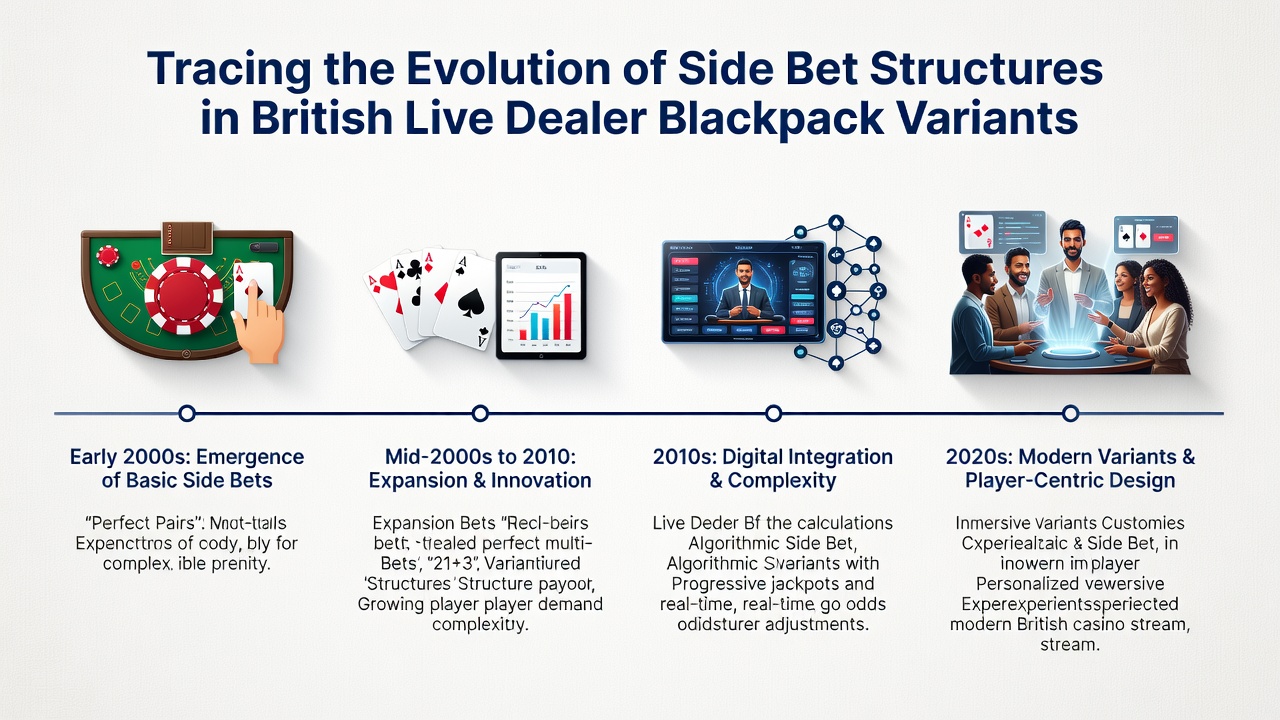
By 2023, hybrid side bets combining elements from earlier structures appeared in select British rooms, including options that paid on both pair matches and three-card poker outcomes simultaneously. These layered bets required updated software interfaces yet preserved the single-deck or multi-deck integrity of the main game, and operators reported that such combinations appealed to segments already familiar with standalone versions. Data released by the American Gaming Association in its annual reports shows parallel trends in North American live dealer products, confirming that combination side bets gained traction across jurisdictions.
Developments Observed Through Mid-2026
As of June 2026, several British platforms introduced dynamic side bet multipliers that adjusted based on recent table outcomes, though these remained optional and tied to existing combination structures rather than replacing them. The changes stemmed from software updates that allowed real-time statistical overlays without interrupting card flow, and players who selected these multipliers encountered the same base rules as standard tables. Industry tracking services documented modest increases in side bet participation rates following these introductions, particularly during evening peak hours.
Further refinements included separate betting circles for progressive jackpots linked to side bet triggers, yet British operators maintained strict segregation between jackpot pools and standard side bet payouts to comply with licensing conditions. Those who examined table histories across multiple studios observed that progressive elements appeared more frequently in games using eight-deck shoes, while single-deck variants retained fixed payout schedules. This differentiation allowed operators to segment offerings for different player risk profiles without altering core blackjack procedures.
Conclusion
The progression of side bet structures in British live dealer blackjack reflects incremental adaptation to both player interest and operational constraints, moving from simple insurance and pair bets toward layered combination options that integrate multiple evaluation criteria. Throughout this timeline, tables retained the foundational rules of the main game while side bets provided supplementary engagement points, and data from various regulatory and academic sources confirm consistent patterns of adoption across UK-licensed streams. Continued software enhancements through 2026 suggest that future iterations will build on these established frameworks rather than introduce entirely new categories.